Have you ever looked at a painting and wished it could shimmer like a gemstone? That’s exactly the magic of acrylic gem painting — turning ordinary From Flat to Facet surfaces into dazzling, crystal-like artworks that catch the light and mesmerize the eye. Whether you’re just starting out or you’ve painted a few canvases already, this guide will show you how to transform your acrylic paintings into sparkling gem-inspired acrylic artwork masterpieces.
From Flat to Facet: Why Acrylic Gem Painting is So Captivating
Acrylic paints are incredibly versatile. They dry fast, layer beautifully, and can mimic everything from smooth glass to rough stone. When you combine that with gem-inspired acrylic artwork, suddenly your painting isn’t just color on canvas — it’s a jewel, a miniature world of light and reflections.
But here’s the beauty of this niche: you don’t need to be a pro to start. With some simple tools, layering tricks, and a dash of patience, you can make your artwork glimmer as if it were carved from crystal.
Essential Supplies for Acrylic Gem Painting
Before diving in, let’s gather the tools you’ll need. Here’s a checklist of must-have acrylic painting supplies:
- Acrylic paints: Include metallics (gold, silver) and jewel tones (emerald, sapphire, amethyst).
- Brushes: Flat, round, and detail brushes. A small fine brush is perfect for highlights.
- Palette knives: For texture and facets.
- Canvas or painting panel: Smooth surfaces are easier for gem effects.
- Gloss medium or varnish: Adds shine and makes your gems look real.
- Water container & palette: For mixing colors.
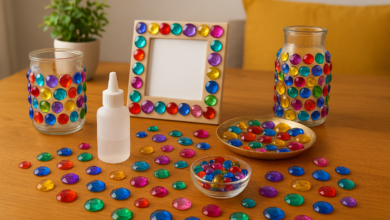
- Optional: Acrylic gems, mica powders, or iridescent mediums for extra sparkle.
Tip: Even beginners can start small — a 6×6 inch canvas works perfectly for practicing gem painting.
Step 1: Choose Your Gem Style
The first step is deciding what kind of gem you want to replicate:
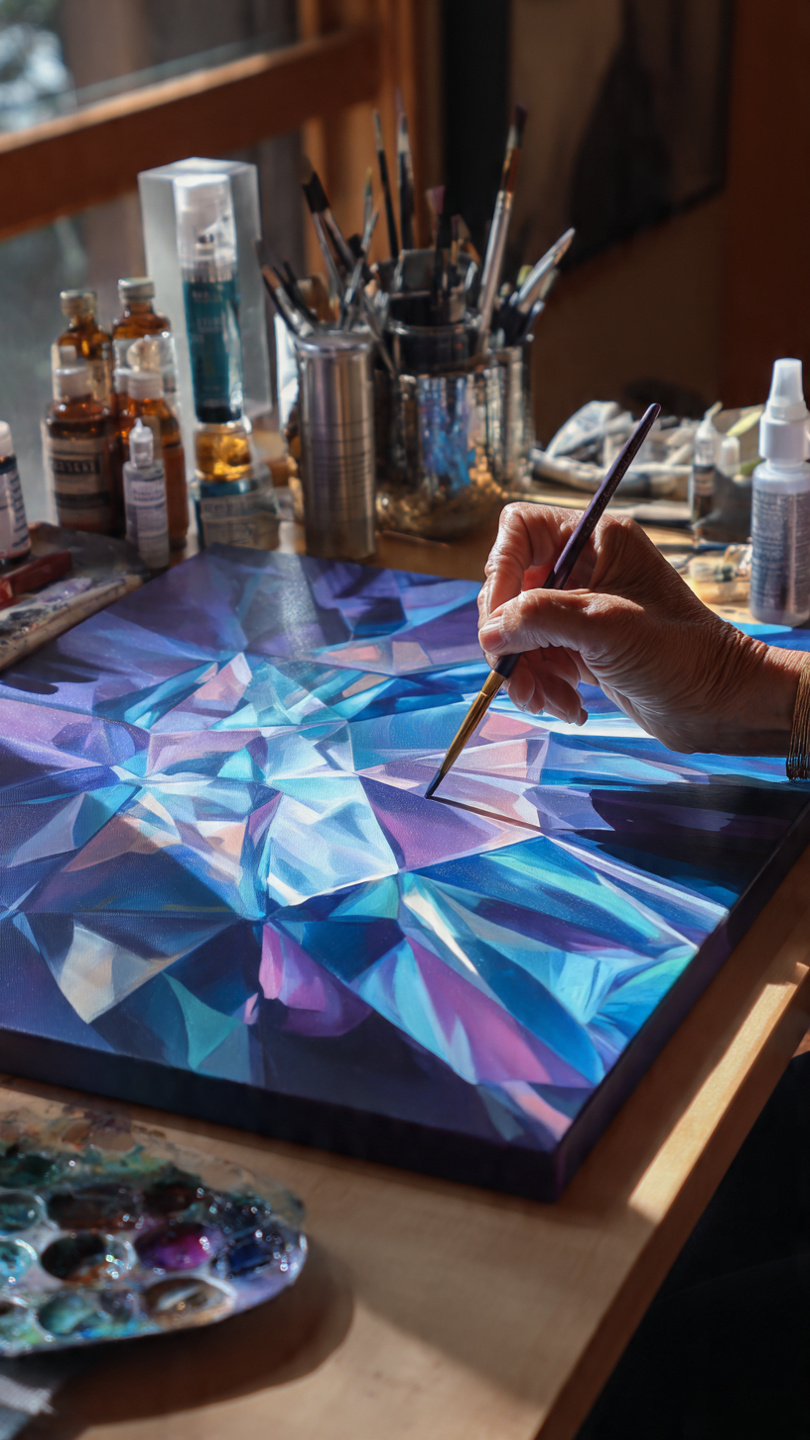
- Faceted gems: Think diamonds or cut sapphires. You’ll focus on sharp edges, reflections, and highlights.
- Smooth cabochons: Rounded gems like opals or polished amethyst. Soft gradients and gentle light reflections work best.
- Clustered gems: A group of small stones together for a mosaic effect.
Pro tip for beginners: Start with one large gem — it’s easier to practice the light and shadow techniques without getting overwhelmed.
Step 2: Sketch & Block Colors
- Lightly sketch the gem shape on your canvas with a pencil. Don’t worry about perfection — the painting will bring it to life.
- Block in base colors: Choose a darker tone for the main body of the gem and lighter tones for areas that will catch light.
- Think of gems as layers of color rather than a single flat hue. Even beginners can start layering simple light and dark areas.
Tip: Always paint from dark to light — it’s easier to add highlights than to correct mistakes in acrylics.
Step 3: Add Facets & Reflections
Now comes the fun part — creating the illusion of depth:
- Use a small brush or palette knife to add lighter shapes that mimic reflections.
- Imagine where the light would hit a real gem. This could be tiny triangular or polygonal shapes.
- Vary the opacity: Some reflections can be subtle, others sharp and bright. This contrast makes your gem pop.
Intermediate artists can experiment with glazing layers — thin transparent paint layers to add realism. Beginners can skip glazing and focus on bold highlights first.
Step 4: Enhance With Highlights and Shadows
- Pick your brightest color (white, metallic, or light jewel tone) and add small highlights at the edges.
- Deepen the shadows using darker versions of your base colors — this adds dimension.
- Step back often to see if the gem looks three-dimensional.
Tip: Even a single bright dot in the right spot can make your painting sparkle like real crystal.
Step 5: Optional Sparkle Techniques
Want to make your gem really shine? Try these:
- Gloss medium or varnish: Apply over the finished gem to give it a polished, glass-like look.
- Acrylic gems or mica powders: Add tiny reflective particles to create shimmer.
- Metallic or iridescent paints: Use sparingly for realistic sparkle.
Storytelling tip: Many artists say this is the stage where your gem “comes to life” — it’s like seeing a rough stone turn into a jewel on your canvas.
Step 6: Experiment With Backgrounds
Don’t let your gem float in emptiness unless that’s your style:
- Dark, muted backgrounds make gems pop.
- Textured backgrounds add interest, like a crushed velvet or mineral-inspired effect.
- For beginners, keep it simple — a gradient wash works beautifully.
Tip: Use contrast to highlight your gem. A light gem on a dark background always shines more.
From Flat to Facet: Common Mistakes to Avoid
Even seasoned painters slip up sometimes. Watch out for these:
- Too many highlights — Overdoing reflections can flatten the gem.
- Ignoring light direction — Your gem needs a consistent light source.
- Thick layers of paint too early — Acrylics dry fast; layering too much at once can muddy colors.
- Skipping step-back checks — Always view your painting from a distance to see how the gem reads.
Pro tip: Beginners should focus on one gem at a time, while intermediate artists can experiment with clusters or complex reflections.
From Flat to Facet : Sharing Your Acrylic Gem Masterpiece
Once your gem painting is complete, it’s time to share:
- Photograph in natural light to capture true shine.
- Share on Instagram, Pinterest, or TikTok — gem-inspired acrylic artwork is highly shareable.
- Add a short story or tip with your post: “Here’s how I turned a flat canvas into a sparkling gem using simple acrylic techniques.”
Tip: Engaging storytelling makes readers more likely to try your technique themselves — and boosts blog traffic!
From Flat to Facet: Final Thoughts
Acrylic gem painting combines creativity, patience, and a bit of magic. Whether you’re a beginner testing the waters or an intermediate artist exploring textures, this technique brings your canvas to life with light, reflection, and jewel-like brilliance.
Remember: start simple, layer thoughtfully, and let your imagination sparkle. With practice, you’ll move “from flat to facet” and create acrylic gems that dazzle everyone who sees them.